Dear Cade

Congratulations! Graduating high school is a big milestone in life. It takes a ton of sweat, energy, and dedication to make it through the gauntlet of classes, sports, college and scholarship applications, work, extracurriculars, and all of the other myriad expectations foisted on young adults. It is truly a challenging life phase to enter and exit productively, and I hope you are able to take some time to relax and enjoy the fruits of your labor with your family and friends before you embark on the next big phase in life.

Last year for Paige’s graduation I gifted her many books and offered some of the insights I have learned throughout my years. I stand by all of that and would implore you to give it a read and some consideration. However, that has all been said and those thoughts and words do not need another rehashing here. What then can I offer you as words of wisdom?

At the risk of venturing into unpopular and controversial territory, I do also want to be brutally honest with you. You come of age during strange and uncertain times. Be it politics, technology, or the changing of gender and social dynamics of society, life has become a complex minefield for young men in particular. Never before has it been less clear what is expected of you by society, and pressure mounts as the pace of change quickens at a clip never before seen in history. This may come to weigh heavily on you and others of your generation in ways you do not yet see or expect.

I do not say this to frighten you. Indeed, the lesson here is the opposite. You will inevitably face challenges and encounter change. How you frame and subsequently react to challenges and change is what will ultimately define you and your life. What I wish to offer you is a mindset to equip when those circumstances arise.

Be Useful

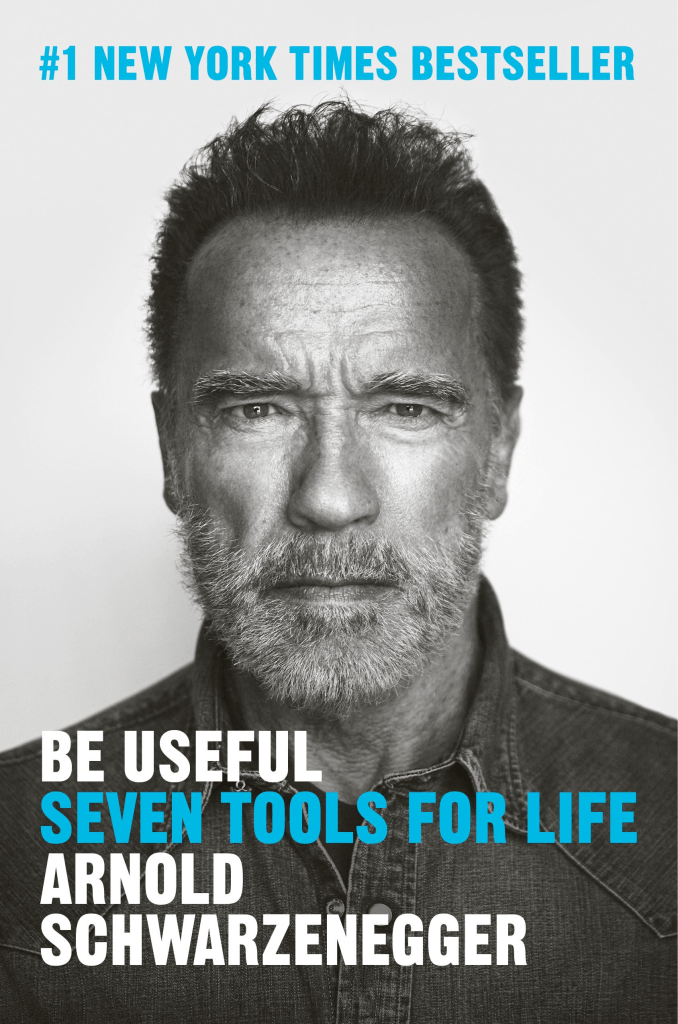
Okay, so I had to include at least one book. Be Useful details the trials and tribulations of Arnold Schwarzenegger from poor and destitute Austrian child to the world’s highest paid actor, world’s strongest man, and eventually Governor of California, the most populous state and 6th biggest economy in the world. He offers some great insights into how he approaches the world, but the title – Be Useful – is advice his father gave him that he never forgot and put to great use.

It sounds trite, but this is actually remarkably good advice. Approaching every part of life thinking, “how can I be of use here?” will take you shockingly far. I can tell you from experience that this is not how most people approach the world. Most people find any and all reasons they can’t possibly contribute in most circumstances, and this holds them back from reaching their potential.

Every problem approached with curiosity and optimism is an opportunity in disguise. In situations of extreme turmoil or uncertainty, don’t be afraid to be the one to step up even if you don’t know the answer. Take hard problems and figure them out. This will help you develop and refine your skills at lightning speed and keep you relevant in every context you find yourself.
Be Intentional

The majority of folks let life happen to them. They float on the sands of time, sometimes with one sail to pull them vaguely in a direction, but you would be shocked at how little of a plan most people have. Although it may be hard for some to stomach, the reality of life is that you get more if you ask for it. You make more money, you get more dates, you get better projects at work, and on and on. Opportunity usually ends up in the hands of those who seek it out or are best positioned to take advantage when it is presented. If you want something, go get it. At the end of your days you won’t remember which TikToks you scrolled through, but you will remember the goals you did and did not accomplish.

The primary reason most people are not intentional is because they are not sure of what they want. What they want may also change. All of that is totally normal. In fact, it is good. You should be revisiting what you want and why you want it. And if you ever feel stuck or lost, go back and revisit this concept. What do you want and why?

On this point I give you a Goal Setting Journal. The creator of this journal is named Will, and he has an interesting journey and Youtube channel where he travels the world and interviews people of various ages about their dreams, goals, fears, regrets, and advice for others. The stories span from heartwarming to heartbreaking, and I find it offers great perspective on developing your own perspective which will ultimately lead you to your path. Once you know your path to follow, don’t just walk down it – run as fast as you can.

Be Kind

And last, but certainly not least: be kind. It costs you nothing, and often it ends up being the one thing that matters most. The impact you make in the world is a function of how many you serve and how well you serve them. Taking some extra time to listen, consider, and understand will set you apart from those in a noisy world that can’t otherwise be bothered. Everyone and everything in this world offers a lesson for you to learn even if it may not always feel that way. Deploy your skills generously and the world will make it worth your while.

P.S. – Your mom said it is okay for me to offer you a fast and spirited, but responsible and safe ride in my Beemer if you would like. Hit me up if that is of interest sometime.

Judge Not, Lest… – The Daily Stoic – Part 21 of 366

When philosophy is wielded with arrogance and stubbornly, it is the cause for the ruin of many. Let philosophy scrape off your own faults, rather than be a way to rail against the faults of others.

— Seneca, Moral Letters, 103.4b-5a

It pleases me to find this particular quote in the section on acceptance. You can not and should not set out to change and judge others. People come with many faults, and I think people dwell on that very deeply without reminders from others. Sanding down your rough edges does not make you better than anyone else. We are all works in progress, and the only garden to which you can actually tend is your own.

This lesson applies well outside the realm of philosophy as well. Your lifestyle is not better or worse than most others. The books you read are not superior to others. Your hobbies are not, the media you consume is not, your schooling is not, and so on. Your lived experience differs from those around you, but that does not diminish or enhance anyone. Given long enough, we all share the same end regardless of how the time was spent.

Focus your energy internally instead of externally. Chase your goals and your truths. Live the life you want and are proud of. Refine your thinking, build up your strengths and scrape off your own faults as best you can. This is a continual process done over the course of a life time.

Along the way you must accept others where they are and as they are. Do not wield your wisdom like a sword or a bludgeon. Instead you must offer it freely and without judgement in the hope it may be of some use to others.

Effort Is Attractive

Good character is not formed in a week or a month. It is created little by little, day by day. Protracted and patient effort is needed to develop good character.

~Heraclitus

Life is hard, and for most of human history it was much harder. There is no doubt that advances in technology have come with many pros and cons. As a society we have become used to comfort, distraction, and immediate gratification. We have also become inundated with constant, incessant access to the best among us. We constantly see and share those who have seemingly impossible, unachievable skills, wealth, knowledge, lifestyles, experiences, and so on. This is demotivating for most humans since you do no see the years of work that goes into producing 30 seconds of greatness on TikTok, and the primal brain thinks, “I could NEVER do that!”

But you can, and you should. Nothing is more attractive than people who love the game they play and give it their all. People who are on their grind because they want to see what they can achieve and what they are truly capable of. People who want to know that, at the end of the day, they left nothing on the table in pursuit of the things they actually care about.

Success and growth requires a willingness and dedication to experience prolonged discomfort, and the human mind actively does not like to do hard things for long periods. This is actually extremely smart biologically and extremely dumb mentally and spiritually. Your biology does not know that its time on this planetary spaceship is limited, but your brain does and so do the brains of others. This is why people putting in the effort stand out in our distractable and comfortable world.

Overnight success is based on luck, and durable long run success is based on effort. You must have the right skills and confidence to capitalize on the opportunities life provides you, and someone relentlessly chasing their passions will be best positioned to make this magic happen.

Put down the phone and chase what matters to you.

You don’t need to the be the best to ever do it. Just be the best you can be and let that be enough.

The Most Important Step A Man Can Take

Some folks consider fiction books a waste of time and liken them to junk food for the brain. This has always confused me because study after study shows that people who read fiction often gain a variety of mental benefits besides partaking in an enjoyable hobby. I can also think of many fictional characters who taught me not just valuable life lessons, but profound lessons about myself. They have provided a plethora of thoughts and traits I cherish and hold dear, points of view I consider novel and pivotal to my world view, and acts of service and fortitude so grand it boggles the mind and challenges me to do better.

I have been marinating on this as a colleague of mine is reading through the Stormlight Archive and rapidly approaching one of my favorite sequences in all of fiction in the book Oathbringer. If you have not read it, this is a fair spoiler for a book that is now over 7 years old, so carry on at your own risk.

Continue reading “The Most Important Step A Man Can Take”

Hope And Fear Are The Same – The Daily Stoic – Part 20 of 366

Hecato says, “Cease to hope and you will cease to fear.” … The primary cause of both these ills is that instead of adapting ourselves to present circumstances we send out thoughts too far ahead.

– Seneca, Moral Letters, 5.7b-8

This one is very interesting. While I imagine most people would indeed consider hope and fear two sides of the same coin, I don’t imagine most people would consider them the same. Hope is good and fear is bad, right?

Wrong. Both are at odds with present moment, and both are entirely outside of your control. That doesn’t mean it is wrong to hope or wrong to fear, but it is wrong to invest your valuable time and energy too deeply on something that may not come to pass, or that is “too far ahead” as Seneca writes.

Two of my other favorite quotes are also along these lines. Seneca said in perhaps his most famous line, “we suffer more in imagination than in reality,” and Marcus Aurelius wrote, “don’t let your imagination be crushed by life as a whole.”

I come back to these lines often and share them with others because this seems to be at the root of anxiety for a lot of people. I have seen multiple people multiple times convince themselves everything was horrible despite them being objectively in the best situation they have ever been in their lives. Just the other day at work I was having a tough discussion with someone fearful of the future that was extrapolating worst case scenarios about things that may never come to pass.

It is easy to suffer worries imagined, but what about suffering wants imagined? Part of what is fascinating about this to me is that this can manifest in a couple of different ways, and none of them good. Some people when imagining wants will encounter loss aversion over something they have never obtained, and loss aversion is extremely potent in the human mind. I know friends who would rather dream of asking out a specific woman in their lives than give it a shot because they can ruminate on it endlessly if they never bring it to a conclusion (a Schroedinger’s Relationship). This is want and fear manifested at the same time! In some ways this is a remarkable achievement of the human mind, as there is no other animal we know of that can achieve these sorts of mental gymnastics.

The other manifestation I find interesting here is what happens when you get what you want. If you have convinced yourself you deserve it and it comes to pass then it may mean far less to you than if it had just happened in the present without any seriousness or import bestowed upon it in your mind. This ties back into the Hedonic Treadmill and the innate human feature of never being satisfied with the here and now. By the time you get what you want you are already hoping, imagining, and wanting the next thing. It can also turn into a sense of entitlement if you convince yourself that this hope of yours should come to pass, and the sense of disappointment may be profound when it does not occur and you have, in Marcus’ words, “let your imagination be crushed by life.”

We all want and we all worry. We all hope and we all fear. But we must also understand that these things can be dangerous because they exist solely in our minds, and, consequently, we directly control how dramatic, impactful, or erroneous they ultimately are.

One on One

Many folks I know lament doing 1 on 1s at work, and the trepidation is often on both sides of the conversation.

Is my boss/coworker/direct report supposed to be my friend? Do we only talk about work? How much of my life do they really need to know? How much of their life do I need to know? Does any of it matter?

Personally I have been on both ends of the spectrum. As an engineer I usually want nothing more than uninterrupted time to do my work, and recurring meetings break into that. Throw in a 1 on 1 where the agenda might be nebulous and the meeting performative then the whole thing seems like a waste of time. As a manager, the number of 1 on 1s can be overwhelming if you are doing direct reports, skip levels, lateral peers, your boss and dotted lines. Also, the higher up you get the more relationships you have to manage, and the success of your organization becomes increasingly predicated on these relationships.

That said, at a fundamental level, businesses are about people. It is about your customer and their problems that you solve. It is about your team that solves those problems. It is about the vendors your business relies on to operate. It is about the communities in which you operate. It is about you, your life, and the value you provide to the business and the value the business provides to you.

I would suggest everyone take this to heart, and doubly so for managers. The goal in all situations is to meet people where they are, understand their wants and needs, and figure out how that fits into the context in which you both operate. One on ones are a very good tool for this. Yes, talk about work and business in your one on one, but also talk about whats going on in your life and the world, the challenges you face, the things you are excited about, and what opportunities you can craft together to maximize value across the board.

As a leader you occasionally need to have hard conversations, and you don’t want these conversations to be your only interaction with people. If people are terrified anywhere you show up then you have a problem. One on ones are good way to address the sense of unease many folks have by creating repeated positive, genuine, and low-stakes interactions with people. This helps both parties have a more open and honest dialogue when shit gets real.

I continue to be amazed at the value that comes from these conversations. Through these conversations we have helped people take life changing sabbaticals, make proper space for people to deal with grief and loss, support team members immigrating between countries, save people at risk of churning from the company, support people starting families and make sure we don’t annoy them while they are out, fix communication problems between teams and individuals, totally reform technologies/architectures/processes, create plans for people to be promoted, identify opportunities and connections for people, and generally build a much stronger team that likes working together and supports each other.

Achieving productive one on ones are an essential piece of building a culture and environment where people can do their best work, and that is where the magic happens.

Everything Is Change – The Daily Stoic – Part 19 of 366

Meditate often on the swiftness with which all that exists and is coming into being is swept by us and carried away. For substance is like a river’s unending flow, its activities continually changing and causes infinitely shifting so almost thing at all stands still.

– Marcus Aurelius, Meditations, 5.23

It amuses me to think that Marcus Aurelius was probably also taught Heraclitus’ pithy adages in a similar manner to which we all learn them today considering that, even in Marcus’ time, it was already ancient wisdom given the hundreds of years that separate the two men’s lives.

No man steps in the same river twice.

Everything flows.

The only constant is change.

To some these words are demoralizing. Must everything be fleeting? How does one build a foundation when change is constant? How can you enjoy the moment knowing it won’t last?

To this I would say, consider the opposite. The trials and tribulations of today hardly matter if they are transient. Your failures, real or imagined, will soon be behind you. The discomfort of this moment will pass if you let it.

When life is hard, endure. Change will come to shuffle the board.

When life is good, enjoy as deeply and passionately as possible. Nothing lasts forever.

And perhaps, instead of trying to build sturdy foundations, you would be better served by building sturdy boats instead.

You Choose The Outcome – The Daily Stoic – Part 18 of 366

He was sent to prison. But the observation ‘he has suffered evil,’ is an addition coming from you.

– Epictetus, Discourses, 3.8.5b-6a

The book notes this classic bit of Stoic wisdom: an event is objective. How we describe it and what meaning we give it is on us.

This makes me think of the massive layoffs happening across the gaming industry right now. It is a tumultuous time and has undoubtedly caused great pain, strife, and agony for many. There is no doubt that for many of those affected it is a calamity, an unfairness stricken upon them, a “suffered evil” in the words of Epictetus here. All of this may be true and valid thinking.

But there will be some who use this as an opportunity for change. Maybe they will found a different game studio, try a different role or industry, or take a much deserved break. I firmly believe that the skills learned in the games industry can make a huge impact if applied more broadly in other industries, and I have no doubt for some this will be an inciting incident that will propel them to new heights they would not have imagined otherwise.

The book’s passage concludes, “acceptance isn’t passive. It is the first step in an active process toward self-improvement.” How you define your setbacks will also define you.

Will you be the phoenix or the ashes?

Never Complain, Never Explain – The Daily Stoic – Part 17 of 366

Don’t allow yourself to be heard any longer griping about public life, not even with your own ears!

Marcus Aurelius, Meditations, 8.9

The burdens of responsibility are immense, and it is human nature to want to air your grievances about any given thing. The conventional wisdom even reinforces this: don’t bottle things up, get it off your chest, blow off steam.

How interesting it is then that we know, and have known clearly since Marcus’ time, that venting does no good. A recent study confirms that venting actually can be benign at best and counterproductive at its worst because it essentially elevates the problems in your mind and allows you to ruminate on them more deeply. Rumination is also deeply tied to mental health and depression.

This comes as a timely reminder for me, and it was one of the most important takeaways from Holiday’s The Obstacle Is The Way — it is easy to complain, make excuses and justifications, but it doesn’t do anything, it never lightens the load, and it does not remove the obstacles you face.

Negativity is like a cancer: it multiplies until it destroys the very being that gives it life if it is not stopped in its tracks.

The Strong Accept Responsibility – The Daily Stoic – Part 16 of 366

If we judge as good and evil only the things in the power of our own choice, then there is no room left for blaming the gods or being hostile to others.

– Marcus Aurelius, Meditations, 6.41

In the world of business there is a key trait that is highlighted in just about every book on leadership and company culture: as a leader you take blame and give praise. Complaints go up the chain of command, not down. This doesn’t mean as a leader you don’t provide guidance, feedback, corrections, and so on, but you must internally learn to differentiate between what is venting and complaining and what is valuable, actionable feedback for your team and organization. The most successful leaders accept responsibility, often without praise and accolades.

Given this, I am always drawn back to a thought exercise I went through in business school which, while it has some eerie dystopian capitalist overtones, I think is useful for many people who have never thought of life this way. Imagine your life a business, and you as the CEO. You must make strategic decisions, and over your life you will likely command millions in revenue from salaries and other sources. You have to choose when and how to invest in your team (that’s you, and your partner if you have one), which opportunities to take and ignore, how to manage your cost structure, and figure out how to deal with the many obstacles that face your nascent enterprise.

You are the the CEO of your life. You are the top of the chain of command. The buck stops with you. It is your choices and actions that will guide the outcomes.

The responsibility is yours.