
Congratulations! Graduating high school is not a trivial endeavor, and you have done it! Please believe me when I say that many high school seniors put in far more work than some adults I know, and all of the elbow grease you have put into launching Spaceship You (https://www.youtube.com/watch?v=snAhsXyO3Ck) into orbit will take you far. In fact, it may take years before you realize just how much the work you have already done will contribute to achieving escape velocity and reaching the great heights you dream of.
Keep building on that momentum. Inertia and friction are surprisingly strong and subtle forces, and it is far easier to course correct a rocket than to get it off the ground. To that end, I was thinking back to when I graduated high school (it was a while ago, but not -that- long ago!) and what insights and knowledge I wish I had come across earlier that would have added velocity to achieving my hopes and dreams. If I listed them all we would be here until the heat death of the universe, so I will share with you five key insights and four books related to them that have positively impacted my life. I hope these do as much good for you as they have done for me.
You can’t fight your biology
My introverted engineering brain really prefers to logic its way out of problems. Unfortunately, you can’t logic your way out of your biology. The simple truth is we are creatures like any other on this interstellar vessel we call Planet Earth. We are uniquely adapted to life on it, and no amount of thinking or wishing otherwise changes those facts. This means all of the conventional wisdom in this area actually matters and makes a surprisingly big difference:
- Get lots of sleep
- Walk every day
- Drink plenty of water
- Spend time with people you care about
- Eat well
I had to relearn these lessons the hard way over the past several years, and this year in-particular I have focused on the last one: eat well. You only get one body, so make sure you nourish it and take care of it the best you can. To this end, I give you Ruhlman’s Twenty. I have found this to be the easiest and most digestible book on cooking techniques for amateur chefs, and the lessons it holds will serve you well for a lifetime.

Happiness is a curve
Enjoy yourself and the fruits of your labor as much as you can in the next few years, as studies show that you will accumulate “complex experiences” rapidly once you hit middle age. It is simply the human condition to experience stress and tragedy in addition to love and joy. Everyone struggles, whether they show it or not. I know this graph can feel discouraging, but know that life’s challenges are shared by all and that happiness waits for you in the end.

On this point I give you Scott Galloway’s The Algebra of Happiness. Scott is sometimes a controversial figure, but the pithy insights he shares in this book have resonated with thousands of readers and made Scott one of the most sought after professors at NYU. Although he talks about the happiness curve, he also shares many other useful pieces of advice for young people that are worth considering.

Money is a tool, not a goal
Life sure would be easier if we had all of the money in the world, right? Well sure, to a point. It is true you absolutely need to achieve some financial stability to avoid the stress of living paycheck to paycheck. But what good is a pile of money once you have a roof over you head, food in your stomach, and some money saved for a rainy day? Figuring out your purpose in life is surprisingly hard, and how much money you actually need corresponds more with your goals and way of life than anything else.
Few things cause stress like not having enough money or understanding how it works. You are probably tired of hearing this, but you also have one great advantage on your side: time. Time is a very important factor in how money can be made to work for you. Learning and employing good financial habits early in life will give you a tremendous leg up, and future you will be thanking you for making smart and meaningful choices.
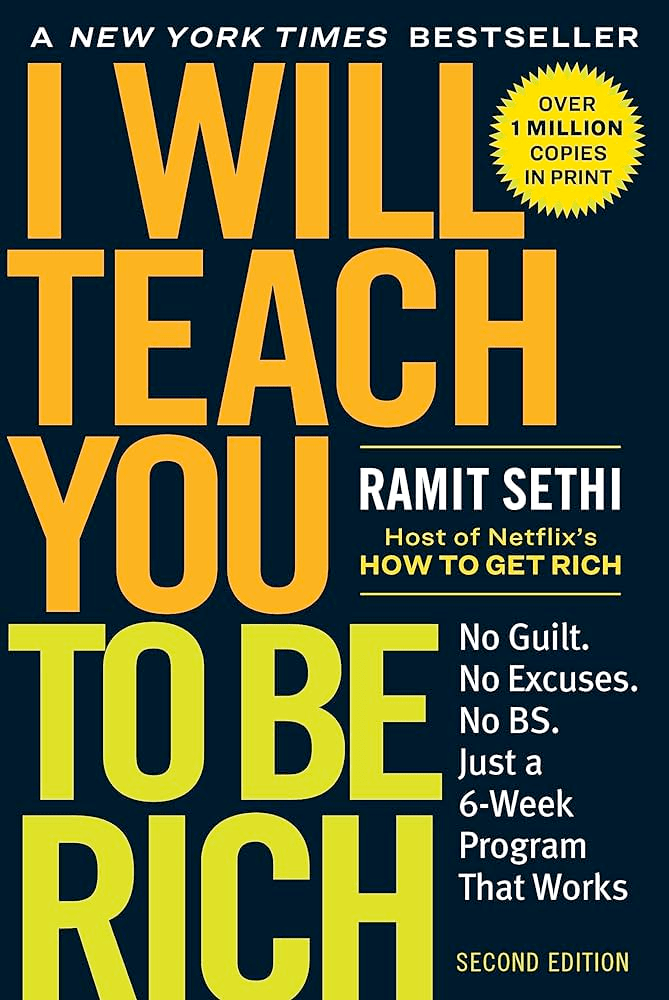
There are many good books in this realm, but Ramit Sethi’s I Will Teach You To Be Rich seems like the best starting point. This book will teach you the basics of everything from credit cards, to 401ks, Roth IRAs, and investing in general. Soak in these words and watch as your stress about money melts away.
When life is hard, consider those who came before
Marcus Aurelius’ rule of Rome was punctuated by near constant war, famine, disease, betrayal, and other hardship. And yet, in Meditations, he shows us how even the most powerful person in the world deals with the same struggles as the rest of us. It is truly incredible how the problems of today mirror those of 162 A.D.
There are many branches of philosophy, but I find few as practically useful as stoicism, and Meditations is one of the greatest works of spiritual and and ethical reflections ever written. When life is hard, consider turning to the stoics for answers. You will find a practical framework of thought regarding your troubles that has stood the test of time. And maybe, just maybe, you will find comfort in the fact that a Roman emperor who lived 1900 years ago was also trying to figure out how to deal with annoying people and procrastination.

Cherish your parents
Your adult life is just beginning, and there is infinite opportunity ahead of you in the vast reaches of space. It is your duty to chart a course, explore, experience new things, and seek challenge and happiness. But don’t forget who made it possible. You come from an awesome family, and your parents have done a tremendous job raising you, supporting you, and helping you build and launch your rocket into space.
This may be hard to imagine, but there will be a time (hopefully in the far distant future) where they won’t be around and you will wish they were. Don’t wait to cherish them. Appreciate them now, today, for who they are, what they have given you, and spend your years soaking up their wisdom to carry wherever life takes you.
Your story is also their story, so make it a good one.
 Cash Flow